
ChicagoAgent ONE
PalmAgentFinance
4.277.00 Reviews
- Version
- 4.8.5.1.5
- Installs
- 10.00K
- Age Rating
- Everyone
Screenshots
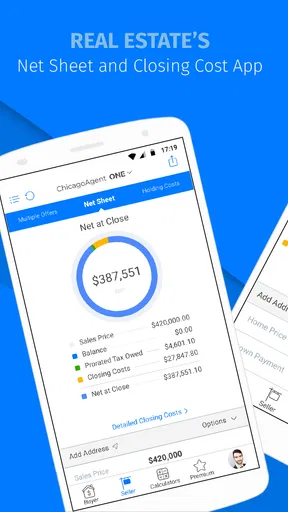
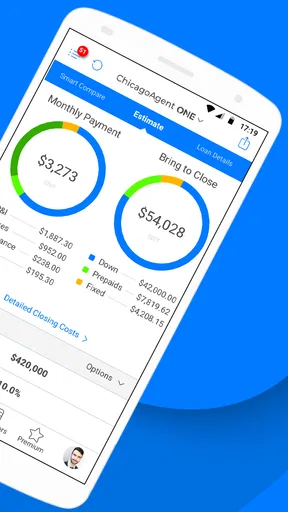
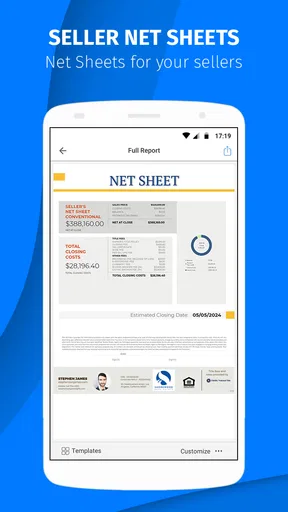


Our Review of ChicagoAgent ONE
 Analysis by Appyee
When I first opened ChicagoAgent ONE, I approached it as a practical work tool rather than something I would browse for fun. That is the right mindset for this finance app from PalmAgent, because its purpose is closely tied to real estate professionals and the daily pressure of keeping property-related work moving. The strongest impression is not novelty; it is the possibility of having a focused mobile companion for moments when a real estate professional is away from a desk.
The app is free to install, which makes trying it fairly easy, although in-app purchases range from $0.99 to $9.99 per item. It is rated for Everyone, has a 4.2 average from around 170 ratings and about 80 written reviews, and has passed the 10K-install mark. Those figures suggest a small, specialized audience rather than a mass-market finance tool. That is important: I would judge it by whether it helps a working agent stay organized and responsive, not by whether it resembles a full consumer banking app.
What ChicagoAgent ONE feels like during the first week
During the first week, the appeal comes from focus. The name and store positioning make it clear that this is aimed at Chicago real estate professionals, so I would not install it expecting general budgeting, investing, banking, or personal expense tracking. Its value depends on whether your work regularly involves property activity, client communication, and decisions that cannot always wait until you return to a computer.
I found that kind of specialization useful in principle. A broad finance app often tries to serve everyone and ends up giving each user a crowded collection of unrelated tools. A professional real estate app can feel more relevant because the vocabulary and workflow are closer to the job. Instead of treating real estate as one category inside a large financial dashboard, ChicagoAgent ONE puts that professional context first.
A realistic everyday scenario would be a real estate agent moving between appointments. Before meeting a client, the agent may want to check information connected with a property, prepare for a conversation, or keep a task from being forgotten while traveling. The benefit is not that the phone replaces every desktop system. The benefit is that a specialized mobile tool can reduce the number of times the agent has to postpone a small decision until later.
That distinction matters for expectations. I would not use this as the only system for every transaction, document, contact, and financial record unless its available tools match the exact workflow of the brokerage. A phone screen is convenient for quick checks and short actions, but it is not automatically the best place for lengthy comparisons, careful document review, or complicated transaction administration.
The first-week test should therefore be practical. I would ask whether the app helps with the tasks I repeat most often, whether the layout makes sense without constant searching, and whether it fits beside the software my office already uses. If it merely duplicates information that is easier to access elsewhere, its professional focus will not be enough. If it shortens small interruptions throughout the day, it begins to justify its place.
Another early consideration is the operating-system requirement. The app supports Android devices running version 7.0 or later, which covers many older phones but still makes compatibility worth checking before relying on it for work. I would install it on the device I actually carry, not only on a newer test phone, because responsiveness and screen comfort can change the experience considerably.
The current version is 4.8.5.1.5. I see that as a sign that the app has had room to evolve, but a version number alone does not tell me whether every part of the experience feels modern. For a professional tool, the important question is whether the current build remains dependable during ordinary work: opening it quickly, finding the needed area, and returning to the main task without confusion.
Where the early convenience is real
The best reason to try it is the gap between a full office system and a busy professional’s actual day. Agents often work in short intervals: in a car before an appointment, between calls, or while waiting for someone to arrive. A specialized app can be useful in those fragments because it gives the work a mobile entry point instead of forcing every action into a desktop session.
My main tip is to judge it against interruptions, not against a perfect office setup. Write down the small real estate tasks that repeatedly get delayed, then see whether ChicagoAgent ONE gives you a quicker route for them. This is more revealing than simply opening each screen once. An app earns lasting value when it removes friction from recurring work, not when its first launch feels polished.
I would also avoid buying anything immediately. Since the app is free but includes optional item purchases, I would first establish which parts of my routine it genuinely improves. A purchase makes sense only when it removes a repeated obstacle or unlocks a function I will use regularly. Paying for a rarely opened professional tool is easy to justify in the moment and difficult to justify after a month.
Why the value has to survive from month to month
After the first month, the question changes from “Can this help me?” to “Do I still reach for it?” That is where many specialized apps lose their appeal. Real estate work has busy periods and quiet periods, and an app may feel essential during a transaction before becoming invisible afterward. ChicagoAgent ONE needs to support habits that recur across the working calendar, not just the excitement of trying something new.
Its strongest long-term case is for professionals whose daily responsibilities repeatedly overlap with the app’s real estate focus. If I am constantly handling property-related work and need a mobile companion, a focused tool may remain useful because the underlying need does not disappear. The app does not have to replace every other service; it only has to be the most convenient place for the specific actions I return to.
For someone who works in real estate only occasionally, the calculation is different. A general notes app, calendar, cloud storage service, or office platform may be enough for infrequent tasks, especially if those tools are already part of a team’s routine. In that situation, ChicagoAgent ONE could become another place to check rather than a genuine time-saver.
This is also where comparison with usual alternatives becomes important. A general finance app is usually better for personal money management, account tracking, or broad financial planning. A generic productivity app is often better for flexible lists and reminders. A desktop real estate platform may be better for deep records, larger screens, and office-wide coordination. ChicagoAgent ONE makes the most sense in the middle: more professionally targeted than a generic utility, but potentially less comprehensive than the main system used by a brokerage.
I would keep that division of labor clear. Use the app for the mobile tasks it handles well, while keeping the authoritative record in the system your team already trusts when the work requires shared access or formal documentation. This reduces the risk of entering information in one place and forgetting to update another. The app becomes a useful front door rather than a second, competing office.
A practical monthly habit would be to review whether I used it during actual appointments, follow-ups, or property work, rather than counting how often I opened it. One meaningful use can be more valuable than many idle launches. I would also check whether the app still saves time after the initial learning period. If each session requires too much navigation, the first-week benefit may not survive ordinary pressure.
The optional purchases deserve the same monthly test. I would ask whether an item supports a repeated workflow or merely adds convenience around a task I rarely perform. The free entry point lowers the risk of exploring the app, but it does not guarantee that every professional will find ongoing value in paid additions. The right choice depends on frequency, not on the existence of the purchase itself.
Who is most likely to keep it installed
I think the best fit is an active real estate professional who works primarily in the Chicago market suggested by the app’s identity, spends meaningful time away from a desk, and wants a dedicated mobile tool rather than another general-purpose app. It may also suit someone who prefers separating professional property work from personal finance and productivity tools.
I would be more cautious if I were a home buyer, casual property enthusiast, or someone looking for a personal budgeting app. The store category is finance, but that label should not be mistaken for consumer banking. The app’s professional real estate orientation is the central reason to use it, and it is also the main reason many people should skip it.
Teams should evaluate it individually rather than assuming that one person’s experience applies to everyone. An agent who works mostly from a phone may appreciate it, while a colleague who spends the day in a desktop transaction system may gain little. The app can be useful without becoming the universal tool for an entire office.
Maintenance, fatigue, and the work of keeping it useful
The maintenance burden is not only about updates. It is also about remembering which information belongs in the app, keeping a consistent workflow, and resisting the temptation to scatter the same task across several services. Any professional mobile app can become tiring when it adds another inbox or another place where unfinished work accumulates.
My preferred approach would be to give ChicagoAgent ONE a narrow job. I would decide in advance which recurring real estate actions belong there and which remain in the brokerage system, calendar, email, or document storage. That boundary is a surprisingly important productivity feature. Without it, a specialized app can create duplication instead of reducing it.
There is also a device-maintenance issue. Because the app supports Android 7.0 and later, it can be accessible on older hardware, but older phones may offer a less comfortable experience than newer devices. Storage, battery condition, screen size, and general phone performance all matter when an app is used between appointments. I would test it under the same conditions as the working day, including poor attention and limited time, rather than only at home on a large screen.
Updates can help a long-term app stay relevant, but they can also change familiar habits. For a tool used in time-sensitive work, I prefer checking the app after an update before depending on it during an important appointment. That is not a criticism unique to this product; it is sensible practice whenever a mobile app becomes part of a professional routine.
The biggest source of fatigue is likely to be repetition without enough payoff. If I must open the app, wait, search, and then transfer the result into another system, the process may be acceptable once but irritating every day. A second source is context switching. Real estate professionals already move among calls, messages, appointments, listings, documents, and client requests. ChicagoAgent ONE earns its place only when it reduces that switching for a clearly defined task.
A third source of fatigue is uncertainty about where the latest information lives. If an agent and a brokerage maintain different records, the mobile convenience can create hesitation instead of confidence. My advice is to establish a simple rule: use ChicagoAgent ONE for quick professional access, but confirm important details in the team’s primary record before making a formal commitment. That trade-off preserves speed without pretending that a mobile companion is always the final authority.
The purchase model can add another small layer of friction. Even modest individual items deserve scrutiny when the app is used as part of a business routine. I would compare the cost with the time saved over several weeks, not with the price of a coffee or an impulse download. If the benefit disappears whenever the app is not opened, the purchase is probably not supporting a durable habit.
Privacy and professional responsibility should shape how I use it as well. I would avoid treating a convenient phone app as permission to place every sensitive detail into it without considering the office’s rules. The safest workflow is the one that matches the brokerage’s approved practices and keeps critical records organized. Convenience is valuable, but it should not outrank clear professional procedures.
What I would do before making it part of my routine
I would begin with one recurring workflow, not the whole business. For a week, I would use the app around a specific type of real estate task and note whether it saves a step. Then I would try it during a busier period, when interruptions and limited time reveal weaknesses that are invisible during casual testing.
Next, I would decide whether the free version is sufficient for that workflow. Only after identifying a repeated benefit would I consider an optional purchase. I would also ask a colleague whether the app fits the office’s existing process, because an individually convenient tool can still be a poor team choice if it creates duplicate records.
Finally, I would keep an exit rule. If I stop using it for several weeks, or if the same task becomes easier in the brokerage’s main platform, I would remove it rather than keeping it out of habit. A professional app should earn recurring attention. Its presence on the phone is not proof of value.
My long-term verdict on ChicagoAgent ONE
ChicagoAgent ONE earns a trial from the right audience, especially an active real estate professional who wants a focused mobile companion and is willing to define its role carefully. PalmAgent has positioned it for a specific kind of work rather than trying to make it a universal finance app, and that focus is its clearest advantage.
My recommendation is conditional but positive. I would keep it installed if it repeatedly shortens mobile property-work tasks, fits alongside the brokerage’s main system, and avoids forcing me to maintain duplicate information. I would not keep it simply because it is free, because it has a respectable 4.2 average, or because the first session feels promising. Long-term value comes from repeated usefulness.
The app is less suitable for personal finance, casual property research, or professionals who already have a complete mobile workflow that they trust. In those cases, a general finance tool, a flexible productivity app, or the brokerage’s established platform may be the better choice. Adding another app would only increase maintenance and fatigue.
For the intended professional, though, the low-cost entry point makes experimentation reasonable. I would install it, test one real workflow, delay optional purchases until the benefit is clear, and review its usefulness after the novelty fades. The lasting question is simple: does it remove a recurring interruption from my work? If the answer is yes, ChicagoAgent ONE can deserve a permanent place on an agent’s phone. If the answer is no, its specialized identity will not compensate for the extra app to maintain.
Verdict
Strengths of ChicagoAgent ONE
- Fast access to Chicago Police Department non-emergency services
- Clear guidance for reporting incidents and requesting assistance
- Useful location-based information for Chicago residents and visitors
- Streamlines communication with city services from a mobile device
- Simple interface makes common police-related tasks easy to find
Limitations of ChicagoAgent ONE
- Limited usefulness outside Chicago or for users unfamiliar with local services
- Some features may require location permissions to work properly
- Response times depend on police department availability, not the app
- Not a replacement for calling emergency services during urgent situations
- App functionality may be affected by outages or changes to city systems
Other Releases by PalmAgent
View All
FidelityAgent ONE
Finance4.2

TicorAgent ONE
Finance4.4

LawyersAgent ONE
Finance4.1

PalmAgent ONE
Finance3.4
Similar Picks in This Category
View All
Google Wallet
Google LLC4.3

Airtel: Recharge, Bank & Loans
Airtel4.0

PayPal - Pay, Send, Save
PayPal Mobile4.2

DANA Indonesia Digital Wallet
PT Espay Debit Indonesia Koe4.5

Binance: Buy Bitcoin & Crypto
Binance Inc.4.8

Cash App
Block, Inc.4.7
Frequently Asked Questions
What is ChicagoAgent ONE and who is it designed for?
ChicagoAgent ONE is a mobile app created for Chicago real estate professionals who need access to MLS-related tools while working away from a desktop. It is intended for authorized agents and industry users, helping them search listings, review property information, manage contacts, and stay connected with clients. Access and available features may depend on the user’s MLS membership, brokerage permissions, and account configuration.
Can I search listings and view detailed property information in the app?
Yes, the app is designed to let eligible users search real estate listings and review important property details from a mobile device. Depending on the account and MLS data available, users may be able to apply filters, save searches, view photos, check listing status, and examine pricing or property information. Data should be treated as professional MLS information, and availability may vary by market rules and permissions.
Do I need a ChicagoAgent ONE account or MLS membership to use it?
In most cases, ChicagoAgent ONE is not intended to function as a fully open public real estate browsing app. Users generally need valid credentials connected to the appropriate MLS or real estate organization before they can access its professional tools. If you are unsure whether you qualify, contact your brokerage, MLS support team, or administrator. Downloading the app alone may not provide access to all features.
Can ChicagoAgent ONE help me communicate with clients and manage my real estate work?
ChicagoAgent ONE may include tools that support agent productivity, such as sharing listing information, organizing saved properties, reviewing client-related activity, and staying informed about listing changes. These features can make it easier to work during showings or while traveling, although the exact functions depend on the version of the app and your account permissions. It should complement, rather than replace, your brokerage’s complete workflow.
Is ChicagoAgent ONE free, and what should I consider before downloading it?
The app may be available to download without a separate purchase, but access to its professional services can depend on MLS membership, brokerage participation, or other account requirements. Before installing it, check that your device meets the supported operating-system requirements and that you have valid login credentials. Also review privacy permissions, mobile-data usage, notification settings, and the organization’s terms for handling real estate and client information.
